From Learning to Earning: How TalentPie Helps You Build a Digital Marketing Career
Most people don't wake up one day and decide to become digital marketers. It usually starts smaller than that - a YouTube video about SEO, a friend who runs Instagram ads for a living, or a job posting that asks for "digital marketing skills" for a role that didn't even exist five years ago. Curiosity turns into research, and research turns into a genuine question: can I actually build a career out of this, or is it just another course that ends with a certificate and no real direction?
That question matters more than most course brochures admit. Learning what SEO or Google Ads means is not the same as being able to run a campaign, read the data, and explain your decisions in an interview. The gap between "I studied digital marketing" and "I can do digital marketing" is where most beginners get stuck. This is also where practical, project-based learning makes a real difference - the kind of training TalentPie, the training division of Gary Global Solutions, focuses on. If you're evaluating a digital marketing course in Noida, understanding this gap is the first step, before you even compare institutes or fees.
Why Digital Marketing Is Becoming a Career Choice
Ten years ago, marketing meant hoardings, print ads and the occasional TV commercial. Today, a small business in Noida is more likely to worry about its Google ranking or Instagram engagement than a billboard on the highway. That shift didn't happen overnight, but it has changed who gets hired and what they're expected to know.
Growing Demand for Digital Marketing Skills
Businesses of almost every size - from D2C brands to real estate developers to coaching institutes - now run some form of online presence. Someone has to manage that presence: write content, run ads, track performance, fix what isn't working. This has created steady demand for people who understand SEO, social media, and performance marketing, not as abstract concepts but as day-to-day skills. It isn't a hype cycle; it's simply how businesses operate now.
Who Can Build a Career in Digital Marketing?
One thing that makes this field different from, say, engineering or finance, is that it doesn't demand a specific degree. Commerce graduates, engineers who didn't want a coding job, English literature students who can write well, homemakers returning to work, even small business owners who want to run their own marketing - all of them show up in digital marketing classrooms for different reasons.
What actually matters is curiosity, comfort with numbers and tools, and a willingness to keep learning, because platforms like Google and Meta change their algorithms often enough to keep everyone on their toes. This accessibility is part of why so many career switchers consider a digital marketing career in India worth exploring, regardless of their educational background.
What Skills Do You Need to Start a Digital Marketing Career?
There's no single skill that defines digital marketing. It's a mix of disciplines that work together, and a good beginner course should expose you to most of them before you decide where to specialise.
Search Engine Optimization (SEO)
SEO is often the starting point, and for good reason - it teaches you how search actually works. This includes keyword research, understanding search intent, on-page SEO, technical SEO basics, and content optimisation. Internal linking, the kind of thing that quietly connects one page on a website to another, also falls under this. Tools like Google Search Console come in here too, not as a theory topic but as something you actually open and read data from. A person who has only read about SEO will describe it differently from someone who has audited a real page and tried to fix its issues.
Social Media Marketing
Social media looks deceptively simple from the outside - post something, get likes. In practice, it involves content strategy built around a specific audience, understanding what works on Instagram versus LinkedIn versus Facebook, and reading engagement data to see what's actually landing. A brand page for a clothing store and a page for a B2B software company need completely different content approaches, and beginners often don't realise this until they've tried managing both.
Performance Marketing
This is where a lot of the "real" budget conversations happen. Performance marketing covers Google Ads and Meta Ads, but knowing the platforms isn't the point - knowing how to set campaign objectives, target the right audience, write ad creatives that convert, and build landing pages that don't leak leads is. Conversion tracking and campaign optimisation are the parts that separate someone who "ran an ad" from someone who can explain why a campaign underperformed and what they changed.
Content Marketing
Content marketing sits between SEO and branding. It's about creating content that answers what an audience is actually searching for, while still serving a business goal - whether that's traffic, leads, or trust-building. Good content strategy starts with the audience's questions, not with what a brand wants to say.
Analytics and Reporting
Marketing without data is just guessing with better fonts. Tools like Google Analytics and Google Search Console let marketers see what's actually happening - which pages get traffic, where visitors drop off, which campaigns bring in leads that convert. Learning to read these reports, rather than just glancing at a dashboard, is a skill in itself, and one that takes practice to get comfortable with.
AI, AEO and GEO
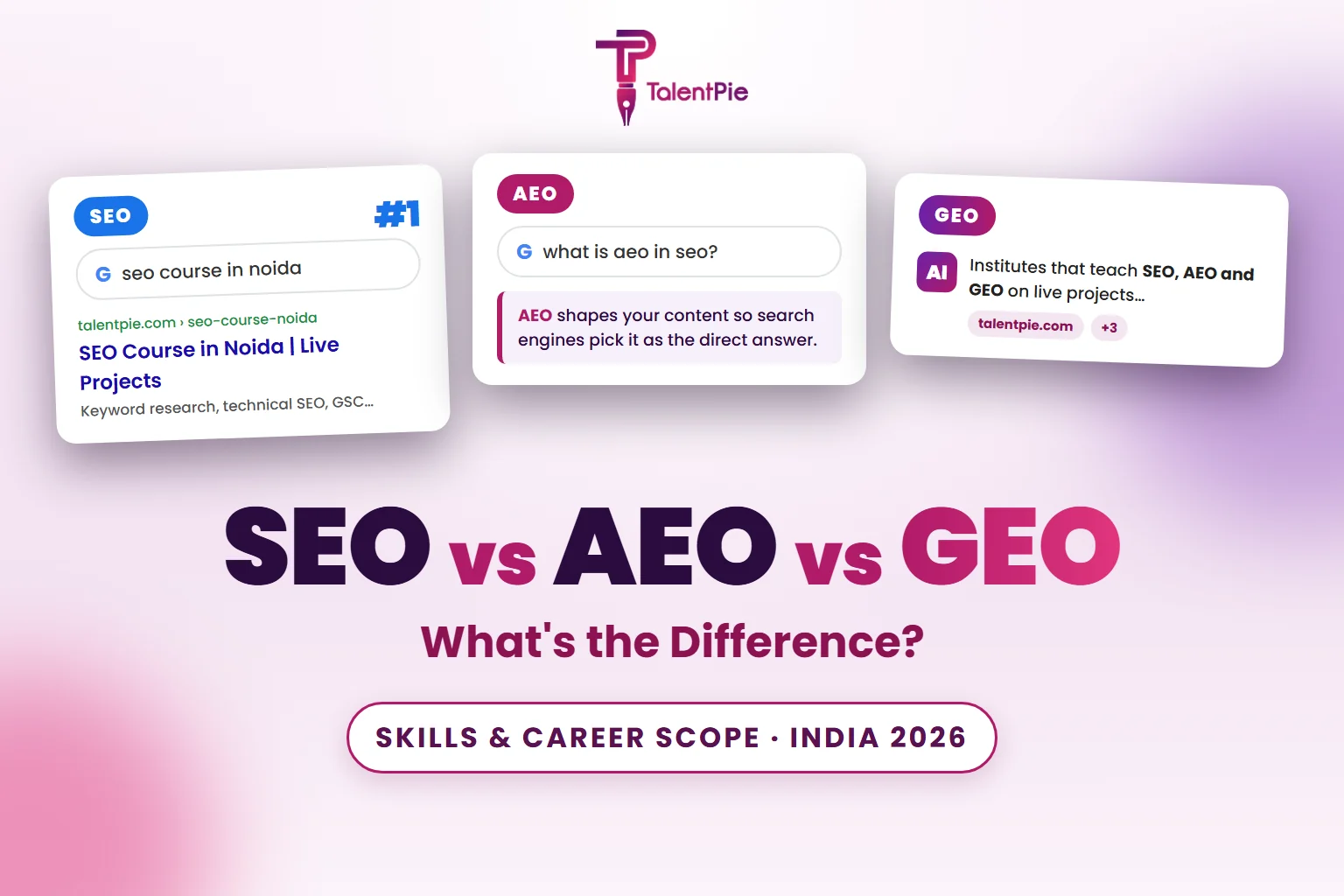
Search itself is changing. People are increasingly asking questions directly to AI tools instead of typing keywords into Google, and this has given rise to newer ideas like AEO (Answer Engine Optimization) and GEO (Generative Engine Optimization) - essentially, making sure content is structured and clear enough to be picked up by AI-driven answers, not just traditional search rankings. This doesn't replace SEO fundamentals; it builds on them. A marketer entering the field today benefits from at least understanding how AI is shaping search visibility, even if the space is still evolving.
Why Learning Digital Marketing Is Not Enough
Here's something most course marketing won't tell you upfront: finishing a course and being job-ready are two different milestones.
The Gap Between Course Knowledge and Job-Ready Skills
Knowing what keyword research means is not the same as sitting down with a tool, picking a niche, and actually shortlisting keywords a real business could rank for. Knowing that Google Ads exists is different from setting a campaign objective, choosing the right audience, writing three ad variations, and figuring out why one variation is getting clicks but no conversions. Reading the definition of a technical SEO audit won't teach you what to do when you open a website and find broken links, slow load times, and duplicate meta descriptions all at once.
This gap is exactly why interviewers often ask, "Have you actually done this, or just studied it?" And it's a fair question, because theory rarely prepares someone for the small, annoying problems that show up in real work.
Why Practical Experience Matters
Working on real or simulated projects forces you to apply what you've learned instead of just recalling it. You make mistakes - a poorly targeted ad set, a keyword list that misses search intent - and those mistakes, corrected with feedback, teach you more than a textbook chapter ever could. Over time, this builds two things: a body of work you can actually show someone, and the confidence to talk about it without hesitating in an interview.
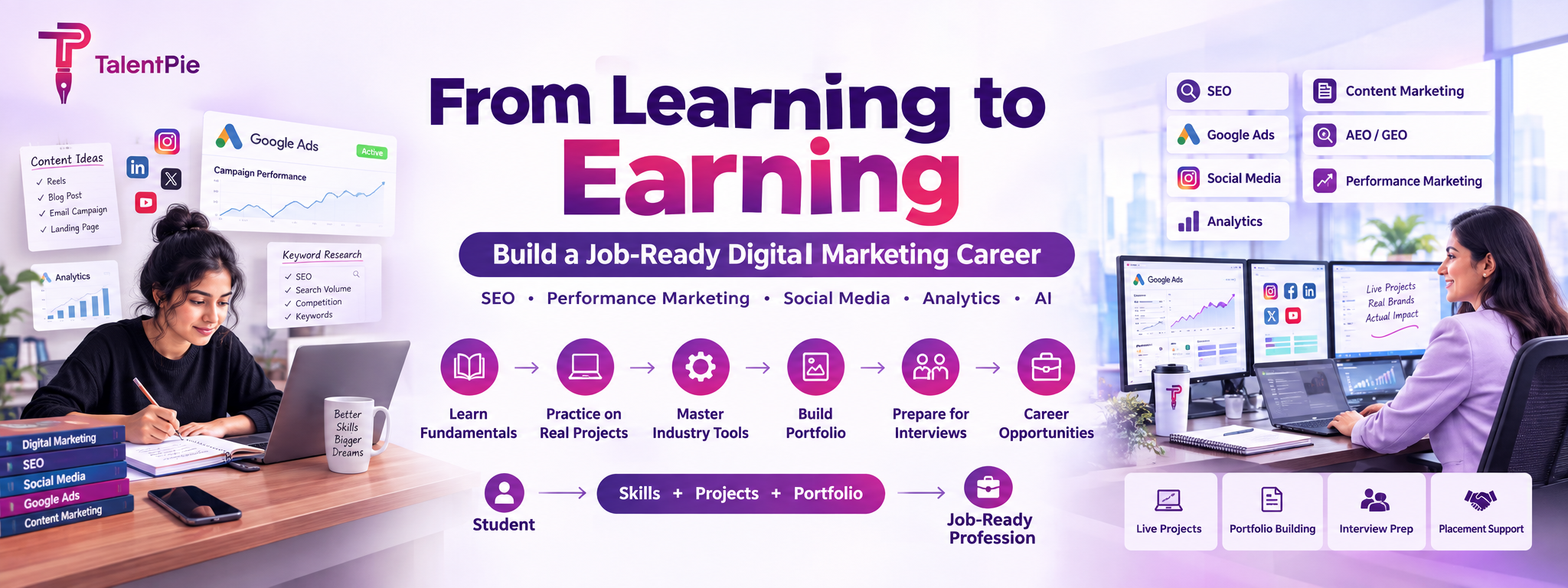
From Learning to Earning: The TalentPie Approach
TalentPie structures this journey in a fairly straightforward way, without skipping the steps that beginners usually need.
Step 1: Learn the Fundamentals
The starting point is understanding the major channels - SEO, social media, performance marketing, content marketing - well enough to know how they connect. This foundational stage isn't rushed, because everything after it depends on having these basics in place.
Step 2: Practice With Real Projects
This is where TalentPie's approach differs from a purely classroom-based course. Because TalentPie operates as the training division of Gary Global Solutions, learners get exposure to live project work within an agency-backed environment, rather than working only on hypothetical case studies. Real projects come with real constraints, which is exactly the point.
Step 3: Learn Industry Tools
Alongside project work, learners get hands-on with the tools the industry actually uses - Search Console, Analytics, keyword research tools, social media schedulers, Google Ads and Meta Ads dashboards, reporting tools, and an introduction to how AI-assisted tools are being used in modern marketing workflows. Reading about a tool in a slide deck is very different from navigating its actual interface.
Step 4: Build a Professional Portfolio
By this stage, the difference between "I know SEO" and "here's the keyword research, on-page fixes, and reporting I did for a project" becomes obvious. A portfolio doesn't need to be flashy - it needs to show that you can do the work, with evidence an employer can actually look at.
Step 5: Prepare for Interviews
Portfolio work becomes the backbone of interview preparation here. Being able to walk an interviewer through why you chose a particular keyword strategy, or why an ad campaign was optimised a certain way, tends to land far better than reciting definitions. TalentPie's training includes this review process, so learners aren't figuring out how to talk about their work for the first time in an actual interview.
Step 6: Get Career and Placement Assistance
It's worth being precise here. TalentPie provides placement assistance - support with resume building, interview readiness, and connecting learners to relevant opportunities. This is not the same as a guaranteed job, and no genuine training program can honestly promise one. What placement assistance does offer is a structured push in the right direction, backed by the skills and portfolio built during the course.
What Makes TalentPie Different From a Traditional Digital Marketing Course?
Learn Inside an Agency-Backed Environment
Being connected to Gary Global Solutions means TalentPie's training isn't purely academic. Learners get a sense of how an actual marketing team operates - deadlines, client requirements, and the back-and-forth that comes with real work - rather than only classroom simulations.
Work on Live Projects
Live project exposure means the work you do during training resembles what you'd be doing in your first job, rather than a disconnected assignment created only for grading purposes. This matters more than it sounds, because real workflows come with ambiguity that textbook exercises usually don't have.
Learn SEO, AEO, GEO, Social Media and Performance Marketing
Rather than narrowing focus too early, TalentPie's course structure gives beginners exposure across SEO, the newer AEO and GEO concepts, social media marketing, and performance marketing. This breadth helps learners figure out where their interest and strength actually lie before committing to a specialisation.
Build Work You Can Show Employers
A certificate tells an employer you attended a course. A portfolio tells them what you can actually do. TalentPie's emphasis on portfolio-ready deliverables - keyword research sheets, campaign structures, analytics reports - is built around this distinction.
What Career Opportunities Can You Explore After Learning Digital Marketing?
SEO Executive
This role typically involves keyword research, on-page optimisation, content coordination, and tracking search performance over time. It suits people who enjoy patterns and long-term problem-solving.
Digital Marketing Executive
A broader role that often touches multiple channels - some SEO, some social media, some reporting - especially common in smaller companies that don't have separate specialists for each function.
Social Media Executive
This involves planning content calendars, understanding platform-specific formats, engaging with audiences, and reviewing what content performs and why.
Performance Marketing Executive
Centered around paid campaigns - setting up, monitoring, and optimising Google Ads or Meta Ads based on performance data, with a strong focus on conversions and ROI.
Content Marketing Executive
Focuses on planning and creating content that aligns with both search intent and business goals, often working closely with SEO teams.
Freelancer or Entrepreneur
Some learners eventually choose freelance digital marketing work, managing clients directly, or apply these skills to run their own small business's marketing rather than joining an agency or company.
How to Choose the Right Digital Marketing Course in Noida
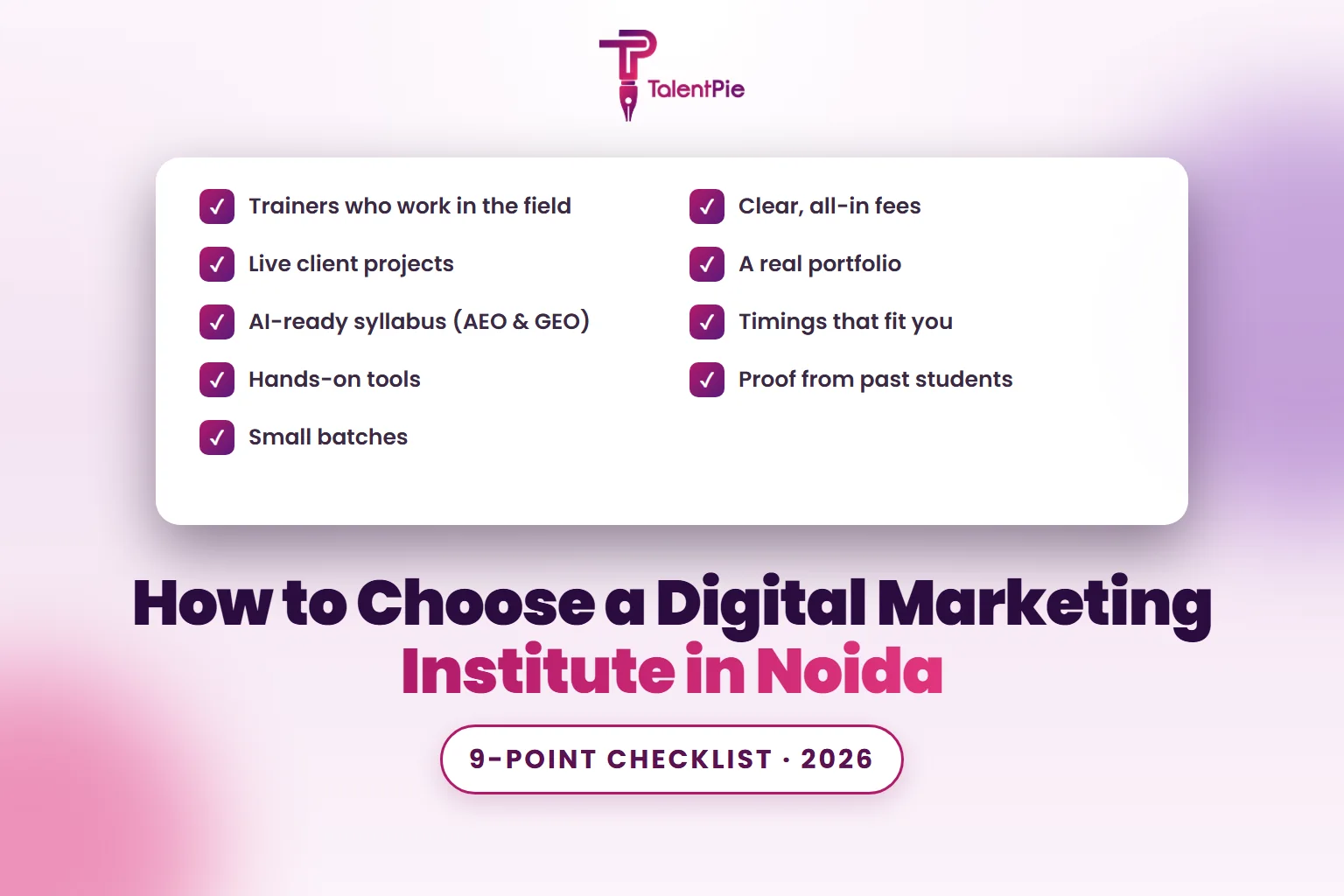
This is worth reading carefully even if you're not planning to join TalentPie. Noida has no shortage of institutes claiming to offer "the best" digital marketing course, and most of that language means very little without a closer look.
Check the Practical Exposure
Ask directly: how much of the course is hands-on versus lecture-based? A course that's entirely theoretical, however well presented, won't prepare you for actual work.
Look Beyond Certificates
A certificate is easy to get. What you should be asking is what you'll walk away with - real project work, a portfolio, applied skills - not just a document to put on LinkedIn.
Check the Tools and Curriculum
Find out which tools you'll actually use during training. If the curriculum only mentions tool names without hands-on practice, that's a gap worth noting.
Understand Placement Support
Be cautious of any institute promising guaranteed jobs. Genuine placement assistance means resume support, interview preparation, and connections to opportunities - not a guarantee, because no training program can control hiring decisions.
Look for Portfolio-Building Opportunities
Ask whether the course helps you build tangible work samples. This single factor often determines how confident you'll feel walking into your first interview.
Running through this checklist with any institute you're considering - TalentPie included - is a reasonable way to filter out marketing noise from actual substance.
Start Your Journey From Learning to Earning With TalentPie
The path from learning digital marketing to actually earning from it isn't complicated, but it does need to be followed in order: learn the fundamentals, practice on real projects, build a portfolio, prepare properly for interviews, and then explore the career paths that fit you best.
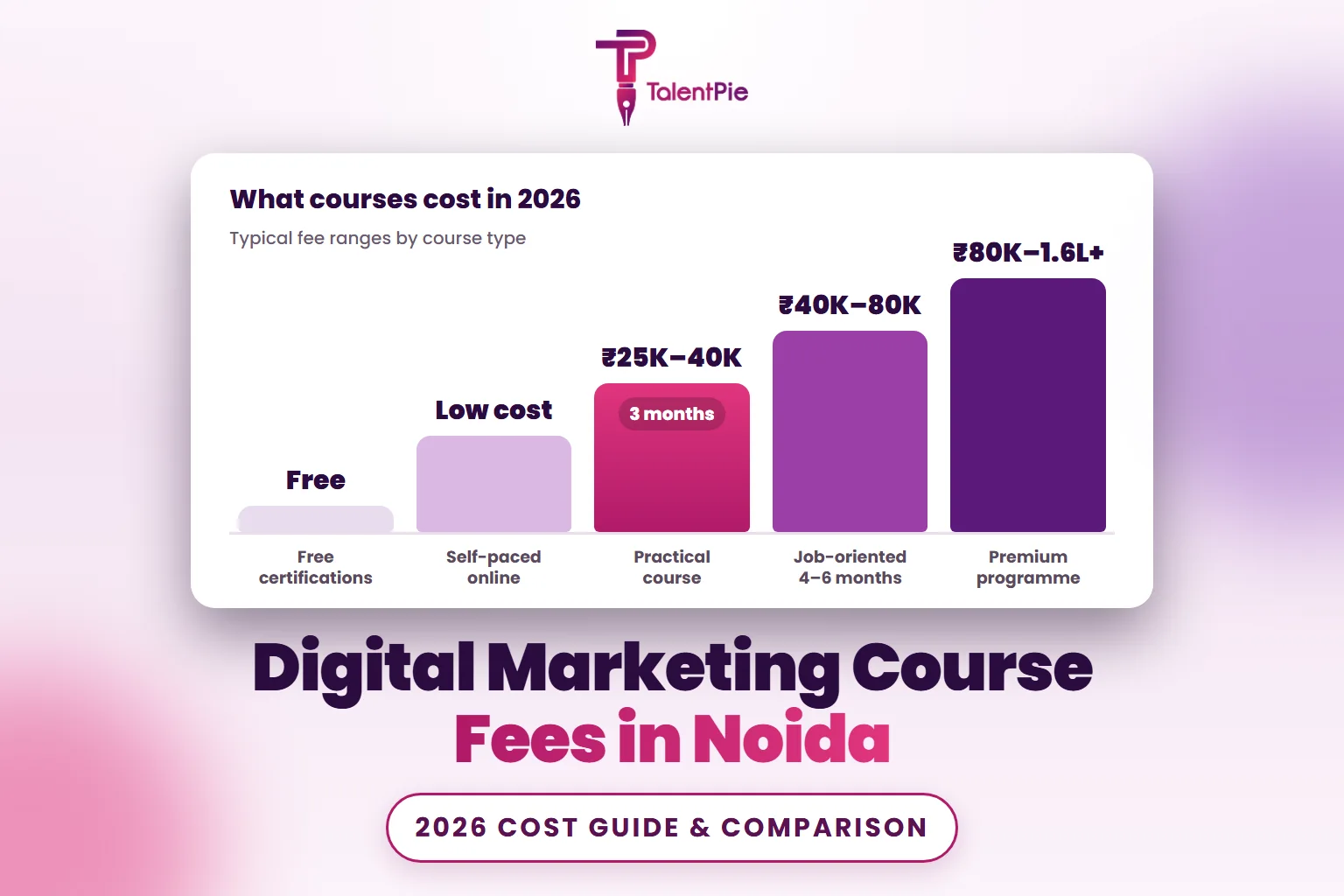
TalentPie offers a 3-month offline Digital Marketing Course at Nx One, Greater Noida West, covering SEO, AEO, GEO, social media marketing and performance marketing, with live project exposure, portfolio support, and placement assistance. The course fee for the complete 3-month offline program is ₹25,000.
[INTERNAL LINK: digital marketing course in Noida]
If you're currently comparing options for a digital marketing course in Noida, it's worth visiting TalentPie's campus, understanding the curriculum in detail, and asking the kind of questions this article has laid out. That conversation will tell you far more than any brochure.
Frequently Asked Questions
1.Is digital marketing a good career for beginners?
Yes, it's one of the more accessible career paths for beginners because it doesn't require a specific academic background. What it does require is willingness to learn practically and stay updated, since platforms and tools change frequently.
2.What skills are required for a digital marketing career?
A working understanding of SEO, social media marketing, performance marketing, content marketing, and analytics is a good starting foundation. Familiarity with tools like Google Analytics, Google Search Console, and ad platforms adds practical value.
3.Can I learn digital marketing without a technical background?
Yes. Digital marketing draws people from commerce, arts, engineering, and other backgrounds. Some technical concepts, like basic SEO or website audits, are learnable through practice rather than requiring prior coding knowledge.
4.Does TalentPie provide live project experience?
Yes, TalentPie's training includes live project exposure through its connection with Gary Global Solutions, giving learners an agency-backed environment to apply what they learn.
5.Does TalentPie provide placement assistance?
Yes, TalentPie offers placement assistance, including support with resumes, interview preparation, and connecting learners to opportunities. This is assistance, not a guaranteed job offer.
6.What can I do after completing a digital marketing course?
You can explore roles such as SEO Executive, Digital Marketing Executive, Social Media Executive, Performance Marketing Executive, or Content Marketing Executive, or choose to freelance or apply these skills to your own business.
7.Is TalentPie an offline digital marketing institute in Noida?
Yes, TalentPie runs an offline Digital Marketing Course from its campus at Nx One, Greater Noida West.
8.How much does the TalentPie digital marketing course cost?
The published fee for TalentPie's complete 3-month offline Digital Marketing Course is ₹25,000.