
Best AI SEO Course in Noida Extension
If you've been searching for an AI SEO course in Noida Extension, you've probably noticed that the search results are a mixed bag - some pages read like generic SEO 101 pitches, and others throw around terms like "AI-powered" without explaining what that actually means in practice. Here's the direct answer: a genuinely useful AI SEO course in Noida Extension should combine solid SEO fundamentals with AI-assisted keyword research, content optimization, technical SEO, analytics, and the newer disciplines of AEO (Answer Engine Optimization) and GEO (Generative Engine Optimization) - all backed by practical, hands-on projects.
That combination matters more now than it did even two years ago. Search behavior is shifting. People are asking questions directly inside AI Overviews, ChatGPT, and Gemini instead of clicking through ten blue links. Ranking a page on Google is still the foundation of an SEO career, but it's no longer the whole job. If you're building a career in SEO - whether as a beginner, a working executive, or a freelancer - you need to understand how AI tools fit into research, content decisions, and reporting, without losing the judgment that keeps your work accurate and trustworthy.
This article walks through what an AI SEO course should actually teach, how to evaluate one, and what kind of career paths open up once you've learned it - so that even if you never enroll anywhere, you'll leave with a clearer picture of what "AI SEO" really involves.
Why Learn AI SEO in Noida Extension?
Noida Extension and the surrounding Greater Noida West belt have grown into a genuine hub for people entering digital marketing - partly because of proximity to Noida and Delhi NCR's marketing and IT job market, and partly because more small businesses in the area are now investing in local visibility. Learning AI SEO here isn't just about convenience; it's about being close to a market where these skills are actually in demand.
Growing Demand for AI-Powered SEO Skills
SEO used to be a fairly linear process: research keywords, write content around them, build links, wait for rankings to move. AI hasn't replaced that process, but it has changed how fast and how thoroughly you can do each step. Keyword research that once took a full day of manual list-building can now be clustered and intent-mapped in a fraction of the time using AI-assisted tools. Content briefs can flag missing entities or subtopics that a competitor is covering and you aren't. Reporting can be summarized instead of manually pulled together in spreadsheets.
None of this means the work happens automatically. It means the SEO professional's job has shifted slightly - from doing every step manually to directing AI tools well and then checking their output critically. Employers and clients are increasingly expecting candidates to know how to do this, which is really the core reason "AI SEO" has become its own skill category rather than just a buzzword tacked onto traditional SEO training.
Practical Learning Opportunities in Greater Noida West
For learners based in Noida Extension, Gaur City, Greater Noida, or nearby parts of Delhi NCR, there's real value in training that's close enough to attend in person, ask questions in real time, and work through live SEO projects with feedback from someone who's actually run campaigns. Online courses have their place, but a lot of the nuance in SEO - reading a Search Console report correctly, spotting why a page dropped in rankings, judging whether AI-generated content actually answers the query - is easier to pick up with direct guidance rather than pre-recorded videos alone.
AI Is Changing Traditional SEO, Not Replacing It
It's worth being clear about this because a lot of course marketing overstates it: traditional SEO fundamentals - crawlability, indexing, on-page structure, backlinks, content quality - are not obsolete. AI has changed how you approach these fundamentals, not whether they matter. A page still needs to be technically sound and genuinely useful to rank well, whether you used AI to help draft it or not. Any course that suggests otherwise is oversimplifying the subject.
What Is an AI SEO Course?
An AI SEO course teaches you how to use artificial intelligence tools intelligently across the SEO workflow - research, content planning, optimization, technical audits, and reporting - while still applying human judgment to verify accuracy and quality. It is not simply a course in generating content with AI.
That last point deserves emphasis because it's the most common misunderstanding people have. AI SEO isn't "type a prompt, get a blog post, publish it." That approach rarely works well and can actively hurt a site if the content is thin, generic, or factually wrong. A proper AI SEO course teaches you to use AI as a research and drafting assistant - for things like identifying search intent patterns, expanding keyword lists, drafting content outlines, and spotting content gaps against competitors - while keeping a human editor in charge of accuracy, tone, and originality.
This also covers newer areas like AEO and GEO, which deal with how your content gets surfaced (or cited) inside AI-generated answers rather than traditional search result pages. We'll get into both later in this article, because they're becoming a meaningful part of what "search visibility" means today.
What Will You Learn in an AI SEO Course?
A solid curriculum moves from fundamentals to applied AI skills, rather than jumping straight into tools. Here's what that typically looks like.
SEO Fundamentals
Before touching any AI tool, you need to understand how search engines actually work. This includes how crawling and indexing determine whether a page even has a chance to rank, how ranking factors are weighted, how to interpret search intent (informational, navigational, transactional, commercial), and how keyword research forms the backbone of a content strategy. Skipping this stage and jumping straight to "AI tools" is one of the biggest gaps in weaker courses - you can't judge whether an AI tool's output is good if you don't understand the fundamentals it's built on.
AI Keyword Research
This is where AI genuinely saves time, if used correctly. Instead of manually sorting a spreadsheet of five hundred keywords, AI-assisted tools can help with:
- Keyword clustering - grouping keywords by shared search intent so you build one strong page instead of five thin, competing ones
- Search intent classification - quickly sorting keywords into informational vs. commercial vs. transactional buckets
- Keyword expansion - surfacing related terms and long-tail variations a manual search might miss
- Competitor keyword and content gap analysis - seeing what a competing page ranks for that your site doesn't yet cover
A practical example: if you're researching "digital marketing course" and its variations, an AI-assisted clustering pass might separate "course reviews and comparisons" queries from "curriculum and syllabus" queries from "fees and duration" queries - three genuinely different intents that deserve three different content approaches, not one page trying to answer all of them.
AI Content Optimization
This section covers how AI supports content creation without replacing editorial judgment. That includes building content briefs and outlines, checking entity and topic coverage against top-ranking pages, identifying when older content needs a refresh rather than a full rewrite, and using semantic optimization to make sure a page actually covers a topic thoroughly rather than just repeating a keyword.
The point that needs repeating here: AI-generated content is not guaranteed to rank. Google's systems are designed to reward content that's genuinely useful, accurate, and demonstrates real expertise or first-hand experience - not content that's simply well-structured. Every AI-assisted draft needs human editing for factual accuracy, originality, and whether it actually answers what the searcher wanted to know. A course that skips this and treats AI output as publish-ready is teaching a shortcut that tends to backfire.
Technical SEO
AI doesn't remove the need for technical SEO - if anything, it makes technical foundations more important, because AI tools can only optimize content that search engines can actually crawl and index in the first place. This part of the course should cover crawlability and indexability basics, Core Web Vitals and page experience signals, internal linking structure, XML sitemaps, robots.txt configuration, and schema markup. Schema in particular has become more relevant with AI search, since structured data helps both traditional search engines and AI systems understand what a page is actually about.
AEO and GEO
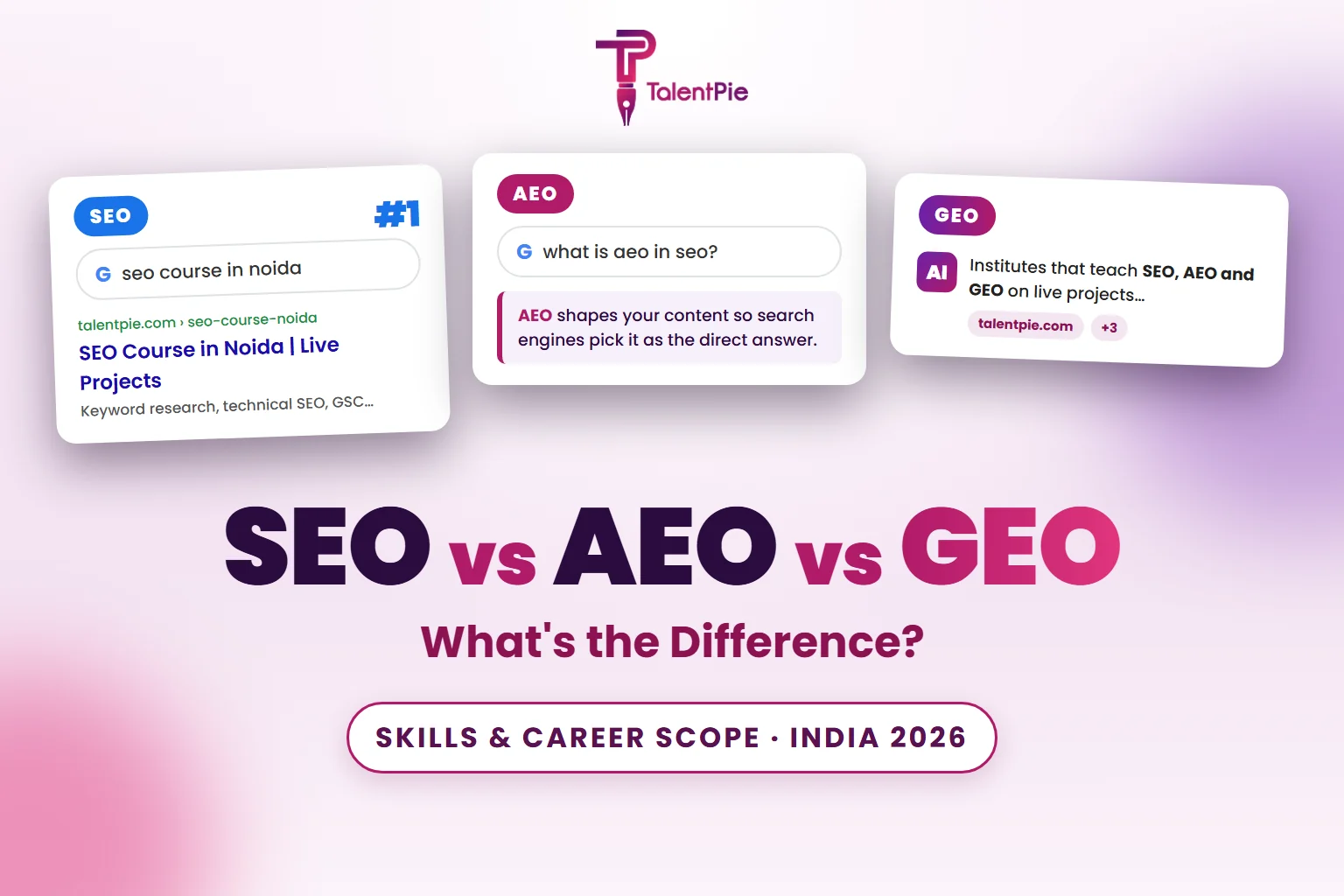
Answer Engine Optimization (AEO) is about structuring content so it can be pulled directly into featured snippets, voice search answers, and other "direct answer" formats. Generative Engine Optimization (GEO) is about optimizing content so it gets referenced or cited by generative AI systems like AI Overviews, ChatGPT, or Gemini when they generate an answer.
In practice, this means learning to write clear, direct answers early in a section (similar to how this article opens each major section), using question-based headings that match how people actually phrase queries, building strong entity signals so search engines and AI systems understand what your business or content is actually about, and creating content that's specific and well-sourced enough to be worth citing. This shouldn't be taught as a set of tricks - it's really an extension of writing genuinely clear, well-organized, trustworthy content.
AI SEO Tools You Should Learn
Tools matter less than knowing what to do with them, but a course should still give you hands-on time with the tools SEO professionals actually use day to day.
|
SEO Task |
Tools |
How They Are Used |
|
Keyword research & competitive analysis |
Ahrefs, Semrush, Google Keyword Planner |
Finding search volume, keyword difficulty, and competitor keyword gaps to prioritize content topics |
|
Technical audits |
Screaming Frog |
Crawling a site to find broken links, indexing issues, duplicate content, and missing metadata |
|
Search performance tracking |
Google Search Console |
Monitoring which queries drive clicks and impressions, and diagnosing ranking or indexing drops |
|
Traffic and behavior analysis |
Google Analytics 4 (GA4) |
Understanding how visitors move through a site and which pages actually convert |
|
AI-assisted research & drafting |
ChatGPT, Gemini |
Generating first-draft outlines, expanding keyword ideas, summarizing competitor content for review |
|
Content optimization scoring |
Surfer or similar tools |
Comparing a draft against top-ranking pages for topic and entity coverage |
|
Structured data |
Schema generators/validators |
Building and testing schema markup so search engines understand page content correctly |
|
Site speed and page experience |
PageSpeed Insights |
Diagnosing Core Web Vitals issues that affect both rankings and user experience |
|
Reporting and dashboards |
Looker Studio |
Turning raw GSC/GA4 data into readable reports for clients or stakeholders |
Learning a tool without understanding the underlying SEO concept behind it doesn't get you very far - a good course teaches the "why" alongside the "how," and expects tool features to keep evolving, so the emphasis should be on transferable workflow understanding rather than memorizing a specific interface.
AI SEO Course vs Traditional SEO Course
The honest answer is that AI SEO isn't a replacement for traditional SEO - it's traditional SEO with an added layer of AI-assisted efficiency and a couple of new disciplines (AEO, GEO) that didn't exist as formal skill areas a few years ago.
|
Area |
Traditional SEO Course |
AI SEO Course |
|
Keyword research |
Manual research and tools |
AI-assisted clustering, intent classification, gap analysis |
|
Content optimization |
Manual on-page checklist |
AI-assisted briefs plus mandatory human editing and fact-checking |
|
Technical SEO |
Covered as core module |
Covered as core module - largely unchanged by AI |
|
Search visibility focus |
Organic search rankings |
Organic rankings plus AI Overviews and generative answer visibility |
|
Entity optimization |
Rarely emphasized |
Actively taught as part of semantic and AEO/GEO work |
|
Workflow speed |
Slower, more manual |
Faster research and drafting cycles, same review rigor |
|
Automation |
Minimal |
Used for repetitive research and reporting tasks |
|
AEO / GEO |
Not typically covered |
Core module |
If you already know traditional SEO, an AI SEO course should feel like an upgrade to your existing workflow rather than a completely new subject.
How to Choose the Best AI SEO Course in Noida Extension
The best way to evaluate a course is to look past the marketing language and check whether it can demonstrate real, specific work - actual audits, actual keyword research examples, actual before-and-after content optimization - rather than a syllabus that just lists buzzwords like "AI tools" without showing what students actually build.
Check the SEO Curriculum
Ask to see the actual syllabus, not just a course description. It should show a clear progression from fundamentals to advanced topics, with specific modules for technical SEO, content optimization, AI-assisted research, and AEO/GEO - not just a single slide mentioning "AI integration."
Look for Live Projects
Reading about SEO and doing SEO are very different skills. A course worth its fee should include live or simulated projects - running a real keyword research exercise, auditing an actual website, building a content brief, and reviewing GSC/GA4 data - not just theory-based assignments.
Check Trainer Experience
Ask directly about the trainer's background: how many years they've worked in SEO, what kind of projects or industries they've handled, and whether they can show real examples of their own work (with client details appropriately anonymized, if needed). A trainer who can walk you through an actual audit they ran is worth more than one who can only recite definitions.
Learn Real SEO Tools
Make sure the course gives you actual hands-on time in tools like Google Search Console, GA4, and at least one paid research tool (Ahrefs or Semrush), rather than just screenshots and explanations.
Check AEO and GEO Training
Since these are newer areas, ask specifically how much of the course covers AEO and GEO, and whether it's treated as a real module with examples, or just mentioned in passing. This is a good filter for how current the curriculum actually is.
Compare Course Duration and Fees
Duration and fees vary significantly depending on depth, live projects, and trainer experience, so it's worth comparing what's actually included rather than comparing price alone. A shorter, cheaper course that skips technical SEO or live projects may end up costing more in the time it takes to relearn things properly later.
Look for Internship and Placement Support
If a course claims placement assistance, ask what that actually includes - resume support, interview preparation, referrals to hiring partners - and ask if you can speak to a past student about their experience. Vague promises without specifics are a red flag.
Check Reviews and Student Work
Look for real student portfolios, project samples, or testimonials wherever possible, rather than relying only on star ratings. Genuine student work is one of the clearest signs of a course's actual quality.
What Should the Best AI SEO Course in Noida Extension Include?
A well-rounded curriculum typically covers SEO fundamentals and advanced keyword research as the base, since everything else builds on understanding search intent and how ranking actually works. From there, it should move into AI keyword research and technical SEO - the technical layer matters because even the best content can't rank on a site that isn't crawlable or fast enough.
On-page and semantic SEO teach you how to structure content so both search engines and readers understand it clearly, while content strategy and AI content workflows show how to plan, draft, and edit content efficiently without sacrificing quality. Local SEO is particularly relevant for anyone planning to work with small or regional businesses, which make up a large share of the SEO client market in NCR.
AEO, GEO, and AI Overview optimization round out the "visibility" side of the course, teaching you how content gets surfaced in newer search formats. Practical modules on Google Search Console, GA4, competitor analysis, SEO audits, link building, and reporting tie everything back to measurable outcomes. Finally, a live project and portfolio-building component matters most of all - it's the difference between a certificate that says you attended a course and actual proof you can do the work.
AI SEO Career Opportunities in Noida
SEO skills open up a range of roles, and understanding the differences helps you figure out where you'd fit.
SEO Executive
Typically an entry-level role focused on execution - keyword research, on-page optimization, basic reporting - under the guidance of a senior SEO specialist.
SEO Specialist
A more experienced role responsible for strategy, technical audits, and managing SEO campaigns across multiple pages or clients.
AI SEO Specialist
Focuses specifically on integrating AI tools into research, content, and reporting workflows while maintaining SEO best practices.
Content SEO Specialist
Focuses on content strategy, briefs, and optimization - working closely with writers to ensure content is both search-friendly and genuinely useful.
Technical SEO Executive
Specializes in the technical side - site architecture, crawlability, page speed, schema, and indexing issues.
AEO/GEO Specialist
An emerging, more specialized role focused specifically on optimizing for AI-generated answers and generative search visibility.
SEO Freelancer
Works independently with multiple clients, often handling the full scope of SEO — research, content, technical audits, and reporting - rather than specializing in one area.
Noida's proximity to a large base of digital marketing agencies and businesses across Delhi NCR means these roles are actively part of the local job market, though actual opportunities and outcomes will always depend on your skill level, portfolio, and how well you interview.
AI SEO Course for Beginners, Students and Working Professionals
Different learners come into this subject from different starting points, and a good course should account for that rather than teaching everyone identically.
AI SEO Course for Beginners
You don't need a technical background to start, but basic comfort with using a computer, spreadsheets, and the internet helps. A beginner-friendly course should start with SEO fundamentals before introducing AI tools, so you understand what the tools are actually doing rather than treating them as a black box.
AI SEO Training for Working Professionals
If you're already working in marketing or SEO, the value here is efficiency - learning how to fold AI-assisted research and content workflows into what you're already doing, without having to relearn the fundamentals from scratch.
AI SEO Course for SEO Executives
For executives looking to move up, this is about shifting from purely executing tasks to directing AI-assisted research, optimization, and reporting - the kind of skill set that supports a move toward a specialist or strategist role.
AI SEO for Freelancers
Freelancers benefit particularly from AI-assisted workflows because they often handle every part of a project alone. Faster research, quicker audits, and more efficient reporting directly translate into being able to take on more clients or spend more time on strategy instead of repetitive manual work.
Frequently Asked Questions About AI SEO Course in Noida Extension
1.Which is the best AI SEO course in Noida Extension?
The best course is the one that can show a clear curriculum, real live projects, an experienced trainer who can demonstrate actual SEO work, hands-on training in real tools, and dedicated AEO/GEO modules - rather than the one with the flashiest marketing. It's worth comparing a few options against these specific criteria before deciding.
2.Can I learn AI SEO without prior SEO experience?
Yes, though a good course should still start with SEO fundamentals before introducing AI-assisted workflows, since AI tools are only useful once you understand what you're trying to achieve with them.
3.How long does it take to learn AI SEO?
This depends heavily on the depth of the course and how much time you can dedicate to practice. Understanding the basics can happen fairly quickly, but becoming genuinely competent - able to run real audits, build content strategies, and interpret data confidently - usually takes consistent practice over a period of months rather than weeks.
4.What tools are taught in an AI SEO course?
Typically a mix of research tools (Ahrefs, Semrush, Google Keyword Planner), technical tools (Screaming Frog, PageSpeed Insights), analytics tools (Google Search Console, GA4), AI tools (ChatGPT, Gemini), and reporting tools (Looker Studio), alongside schema and content optimization tools.
5.Is AI SEO better than traditional SEO?
It's not really a competition - AI SEO builds on traditional SEO rather than replacing it. Technical fundamentals, content quality, and search intent still matter exactly as much; AI simply changes how efficiently you can research and execute.
6.Does an AI SEO course include AEO and GEO?
A current, well-designed course should include AEO and GEO as dedicated modules, since these are becoming a meaningful part of how content gets discovered through AI-powered search experiences.
7.Can SEO executives learn AI SEO?
Yes - in fact, this is one of the more natural upgrade paths, since executives already understand SEO execution and mainly need to learn how to layer AI-assisted workflows on top of that foundation.
8.What is the difference between AI SEO, AEO and GEO?
AI SEO refers broadly to using AI tools across SEO research, content, and optimization workflows. AEO focuses on getting content surfaced in direct-answer formats like featured snippets. GEO focuses specifically on getting content referenced or cited within generative AI answers like AI Overviews or chatbot responses.
9.Is AI SEO useful for freelancing?
Yes, particularly because freelancers often need to move quickly across research, content, and reporting without a large team, and AI-assisted workflows can meaningfully cut down the time each of those tasks takes.
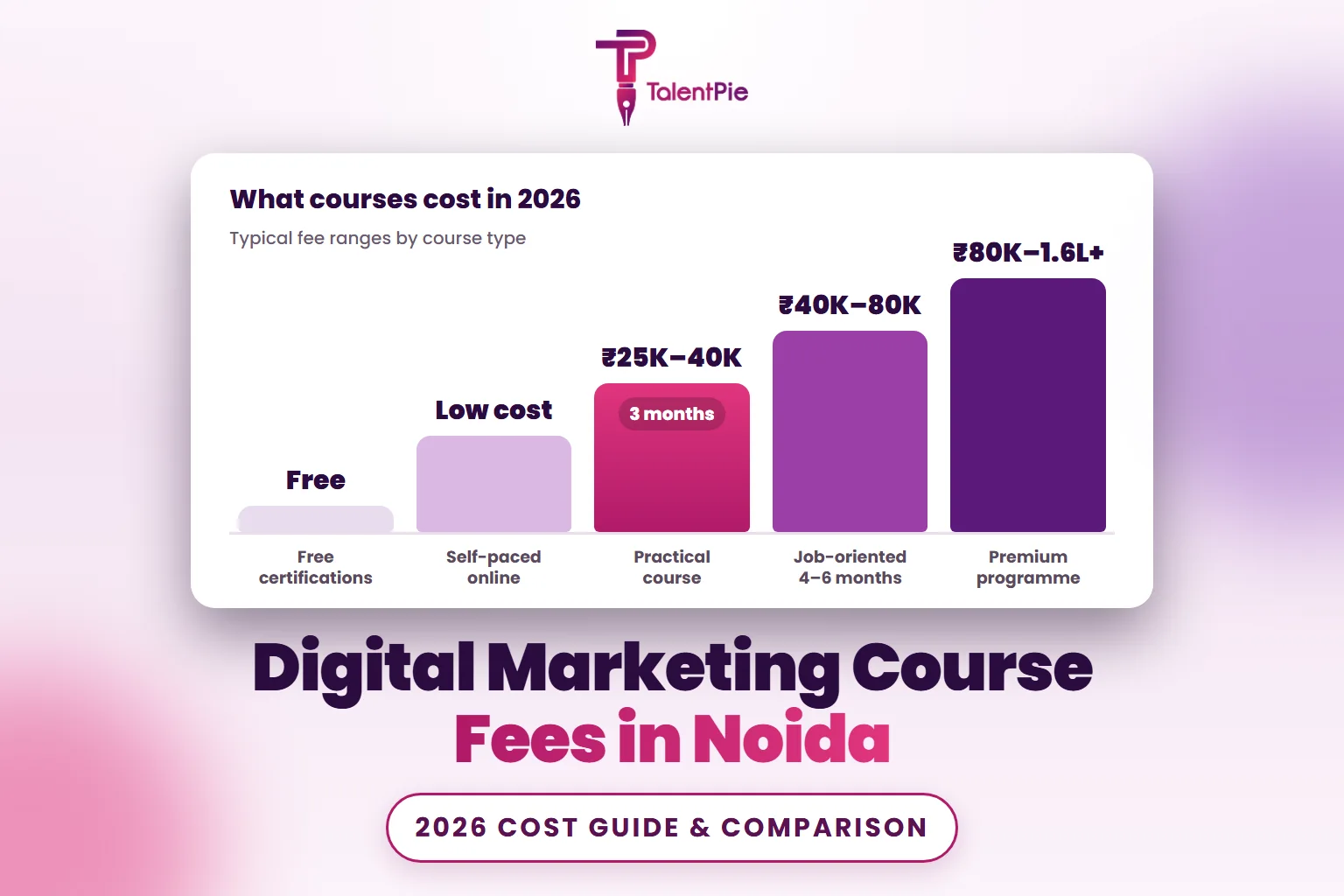
10.What is the average fee for an AI SEO course in Noida?
Fees vary based on curriculum depth, course duration, the number of live projects included, trainer experience, delivery mode, and the level of post-course support offered, so it's best to compare specific inclusions rather than price alone when evaluating options.
11.Are live projects included in AI SEO training?
They should be. Live or realistic project work - actual audits, keyword research exercises, content briefs, and reporting practice - is one of the clearest indicators of a course that will actually prepare you for real SEO work, so it's worth confirming this directly before enrolling.